Oyakodon't
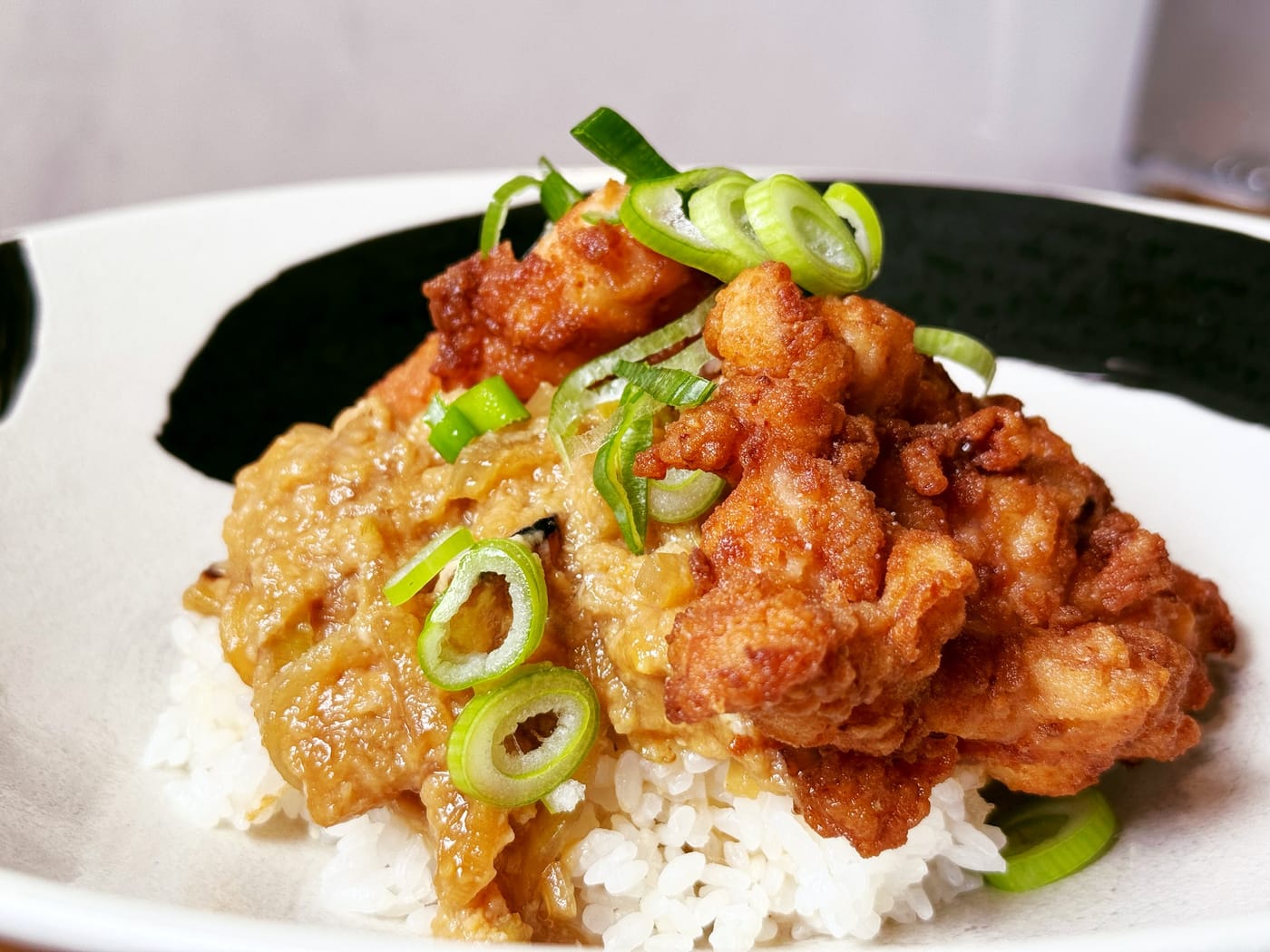
In Japan they often eat a bit of fish or meat together with some rice on the side. If you've ever had breakfast in a traditional Japanese ryokan (traditional hotel), you know what I'm talking about. But sometimes they slap something on top of the rice and call it a donburi which literarily means bowl. Oyakodon is one of those bowls: the name means "parent and child bowl". The chicken is the parent and the egg is the child. Quite grim but very good. Normally the chicken is simmered in the sauce. But I love crispy karaage too much. So I won't be boiling any chicken in any sauce. I'll have crispy karaage chicken on top. If the Japanese see this they'll hate it and say it's not an oyakodon at all. Fine. It's an oyakodon't then. Also, I won't really be doing karaage, I'll do more of an American style fried chicken so that will piss people off even more. This yields 4 portions. Or 2 if you're a really hungry duo. Or it yields 1 portion if you're severely obese.
Ingredients
Karaage:
- 8 boneless chicken thighs (about 1.2 kg; thighs, not breast, they have more fat and more taste)
- 400 g plain yoghurt
- 200 ml milk
- 2 tsp salt
- 1 tsp ground white pepper
- 150 g plain white flour
- 150 g potato starch (potato flour)
- 1.5 l neutral oil for frying (one that can take the heat)
Rice:
- 6 dl Japanese short-grain rice (about 500 g)
- 7 dl water (15-20% more than the rice, measured by volume)
Sauce and egg:
- 2 yellow onions
- 6 spring onions
- 2 tbsp oil
- 2 tbsp sugar
- A pinch of salt and white pepper
- 120 ml mirin or sake (vodka if that's what you've got; I won't tell)
- 90 ml light Japanese soy sauce (light, not the dark Chinese kind; it doesn't have to be the expensive one)
- 8 eggs (two per portion)
This is how you do it!
The Marinade (start 1-2 hours ahead):
- Whisk the yoghurt with the milk, the salt and the white pepper. Nothing else. All the taste comes later, from the sauce.
- Cut each thigh into two nice pieces.
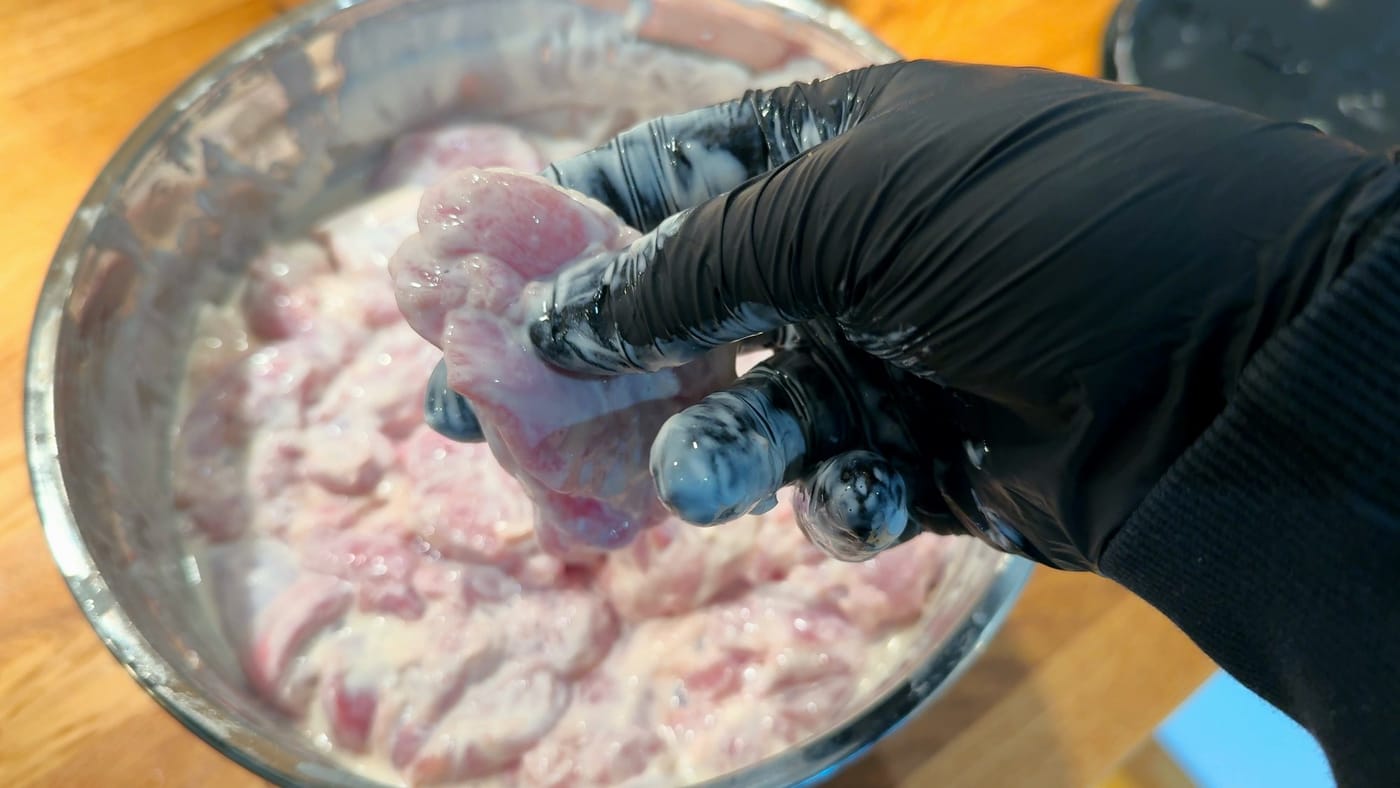
- Mix the chicken into the marinade and leave it for 1-2 hours. Some people say it has to sit for a while for the flavour to penetrate the meat. But that's a myth, America's Test Kitchen tested it, and no flavors penetrate the meat. What the yoghurt (or traditionally buttermilk if you do it the American way) actually does is make the meat softer, and that's what I'm doing here.
The Rice:
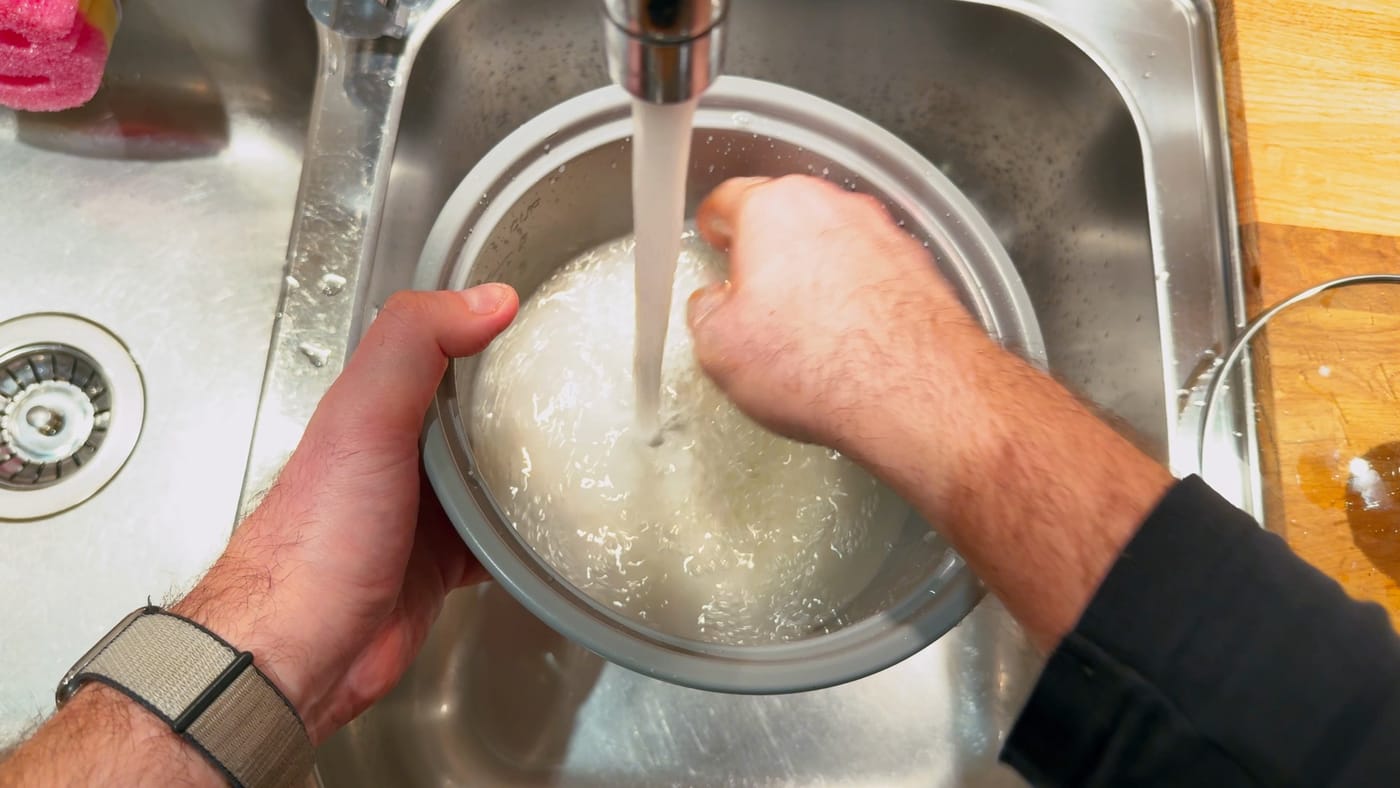
- Rinse the rice several times, swirling it with your hand and pouring off the water. In Japan they say five times. Keep going until the water isn't white like milk anymore.
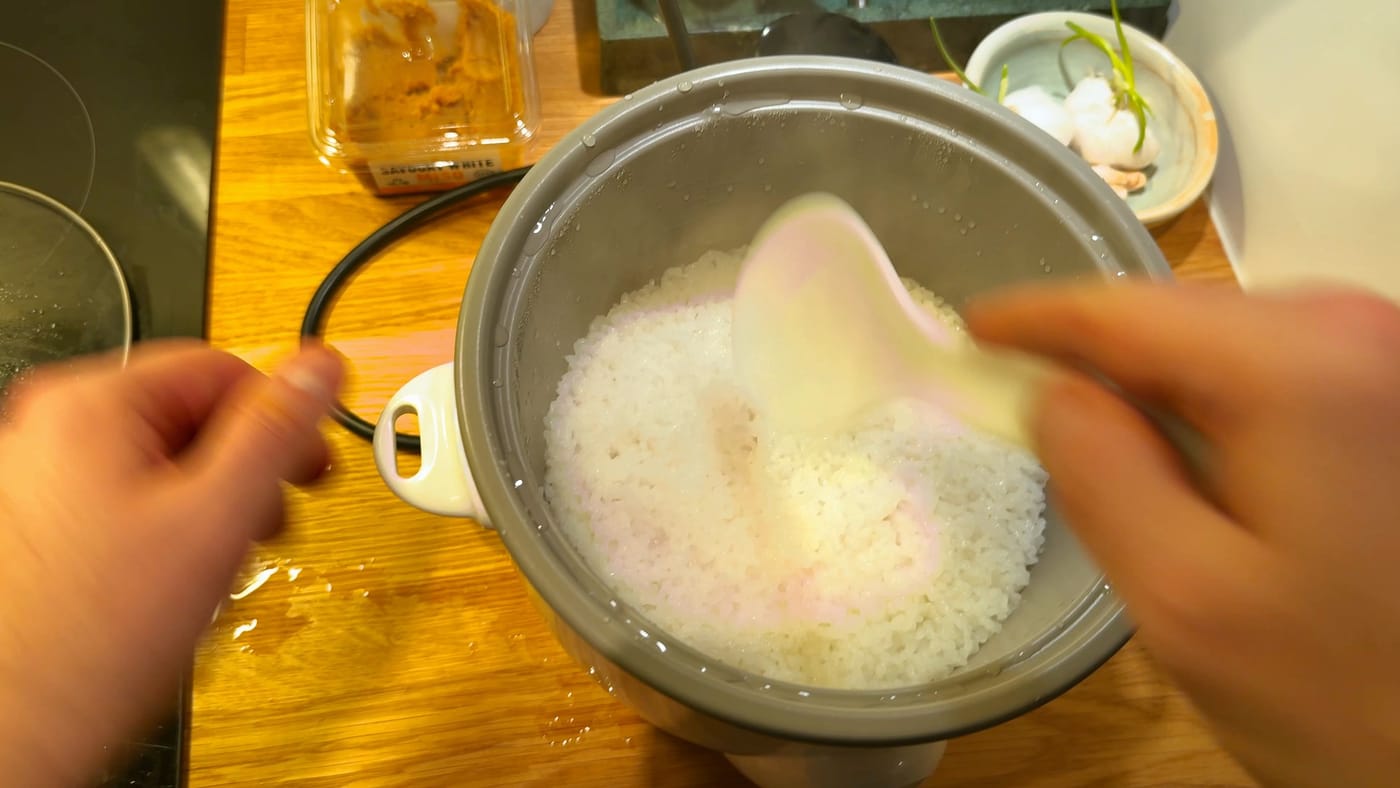
- Measure the water: a little more water than rice, 15-20% more. Cook it in a rice cooker until it's done. No rice cooker? A normal pot works too, just keep the lid on.
- When it's done, fluff the rice with a rice paddle. The Japanese always want fluffy rice. Press it flat into the bowl and a Japanese person will have a fit.
The Karaage:
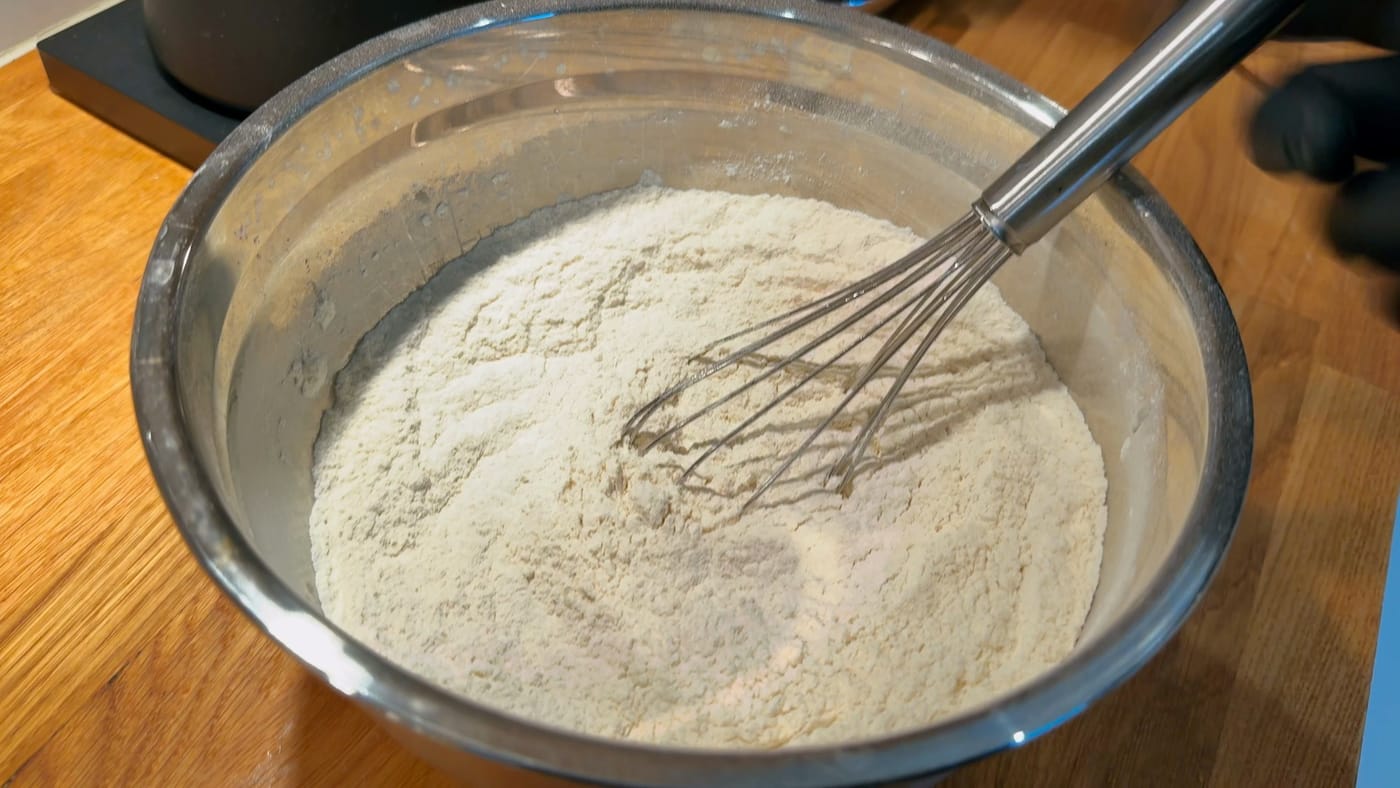
- Whisk the flour and the potato starch together. The flour makes it stick, and the starch makes it unbelievably crispy.
- Pour the oil into a big heavy pot and heat it to 170-175°C. Use a thermometer and be patient.
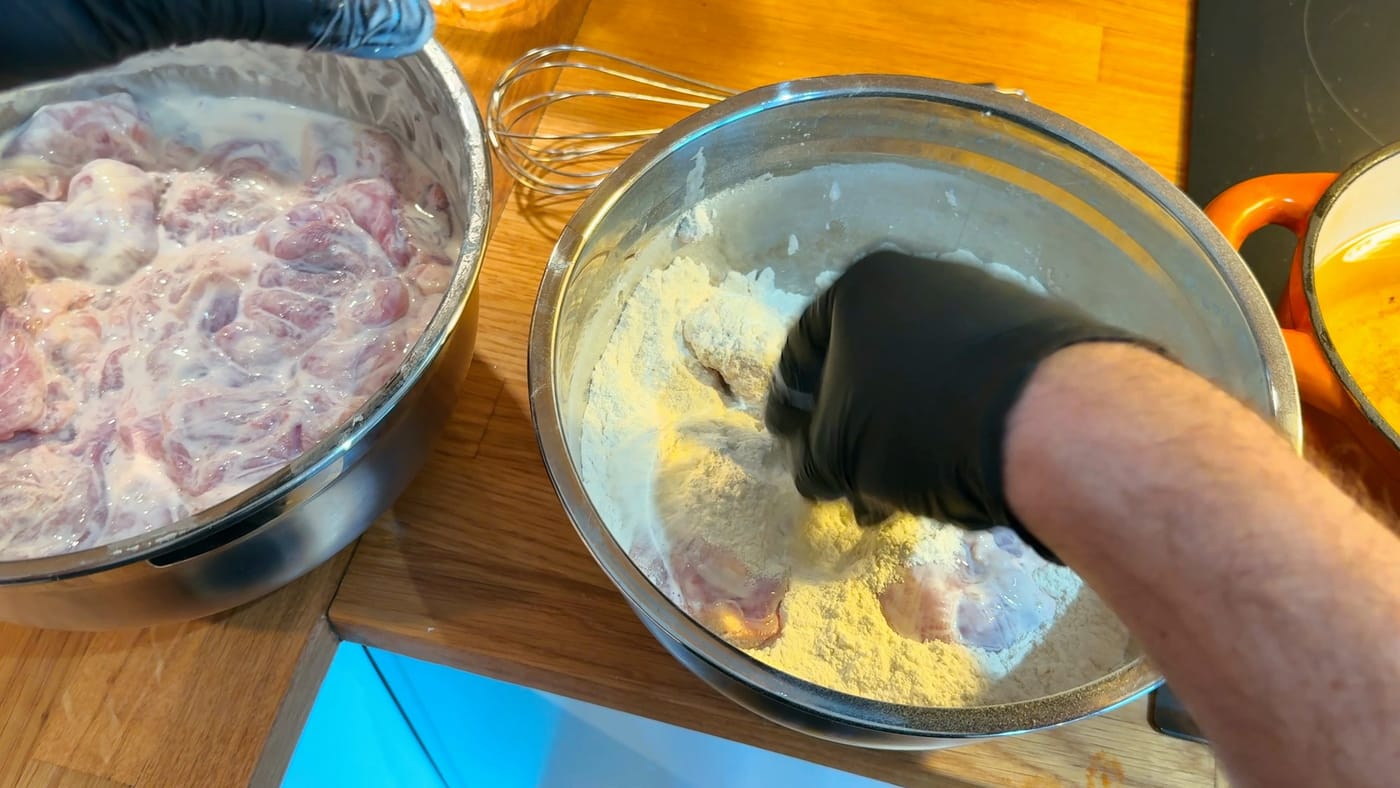
- Take the chicken out of the marinade and roll it in the flour. Really work it in, into every fold, so the flour is everywhere.
- Into the oil it goes, in batches, for 6-7 minutes. The temperature drops when the cold chicken goes in, which is why you start it high. Turn the heat up a bit if it sinks too low, but not to full blast, or you burn your whole house down. When it has a nice golden colour, it's done.
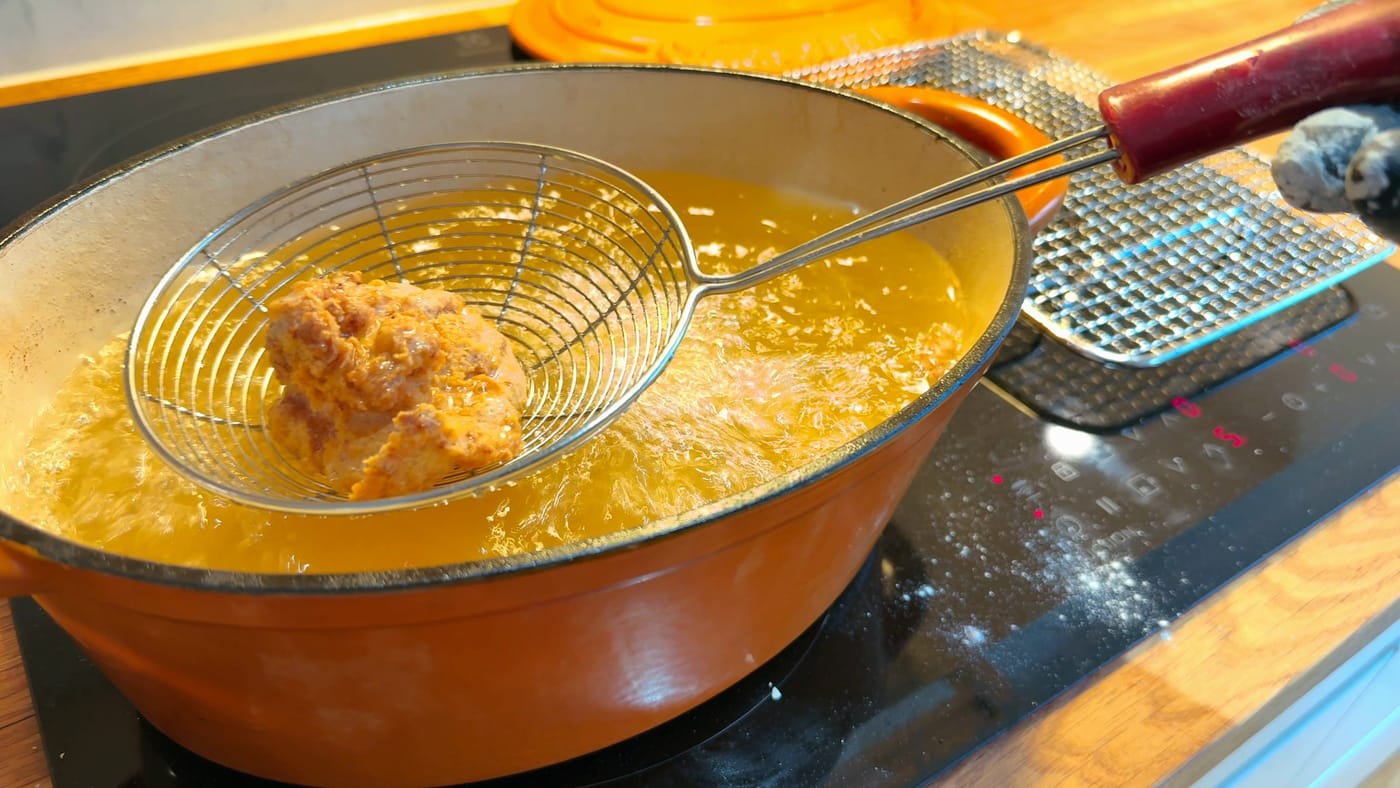
- Lift it out onto a rack. Cooking for a lot of people? Keep it in the oven at about 100°C, but not too long, or it dries out.
The Sauce and the Egg:
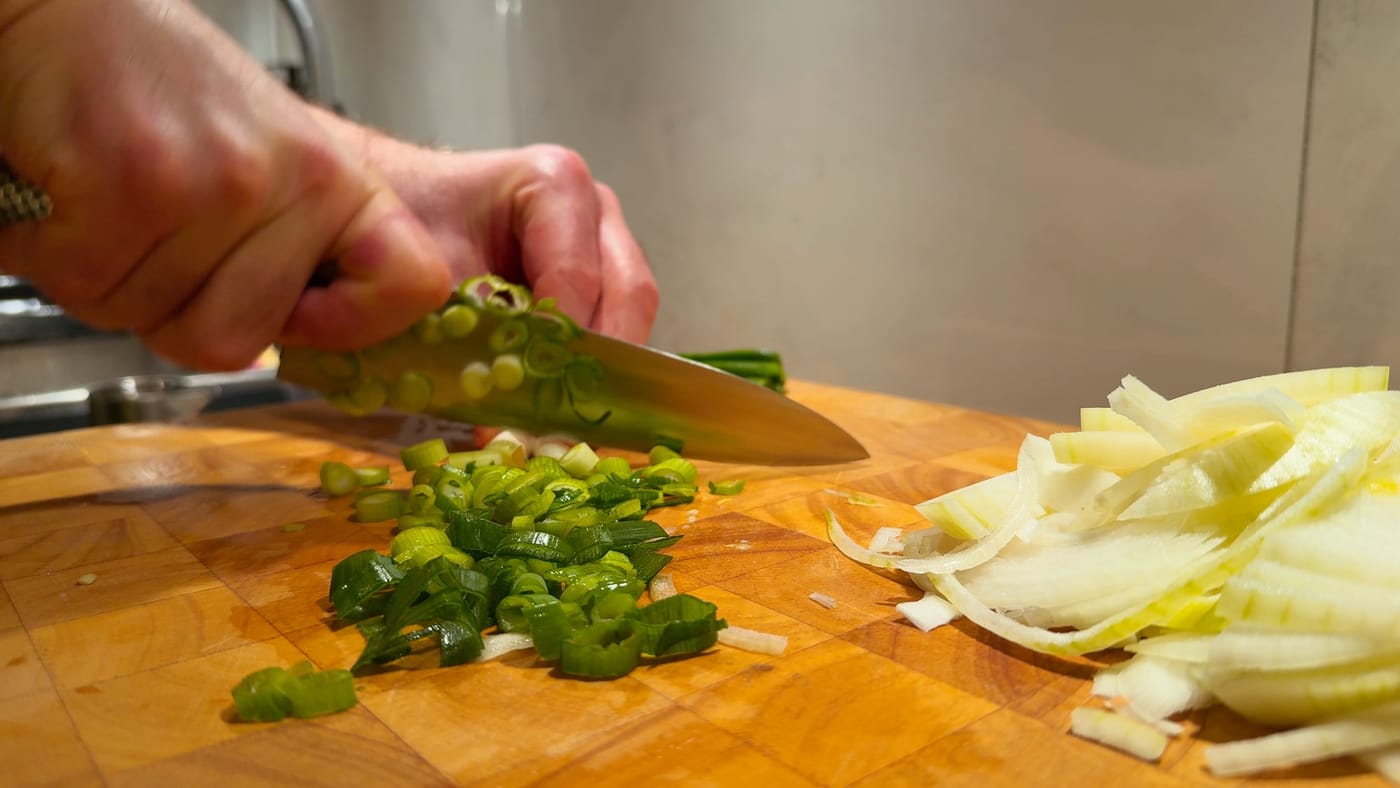
- Slice the onion. Chop the spring onions. They have a fantastic, almost fruity oniony flavor.
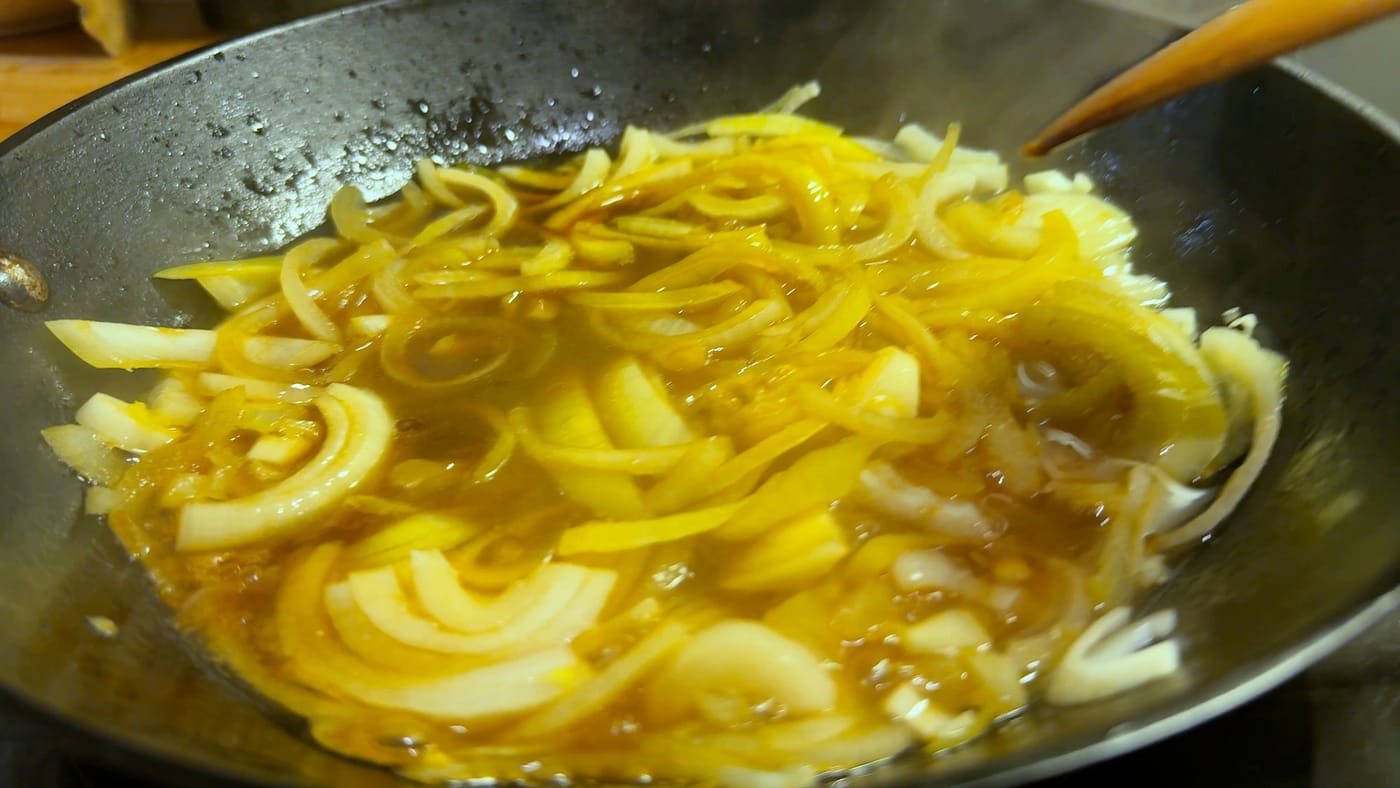
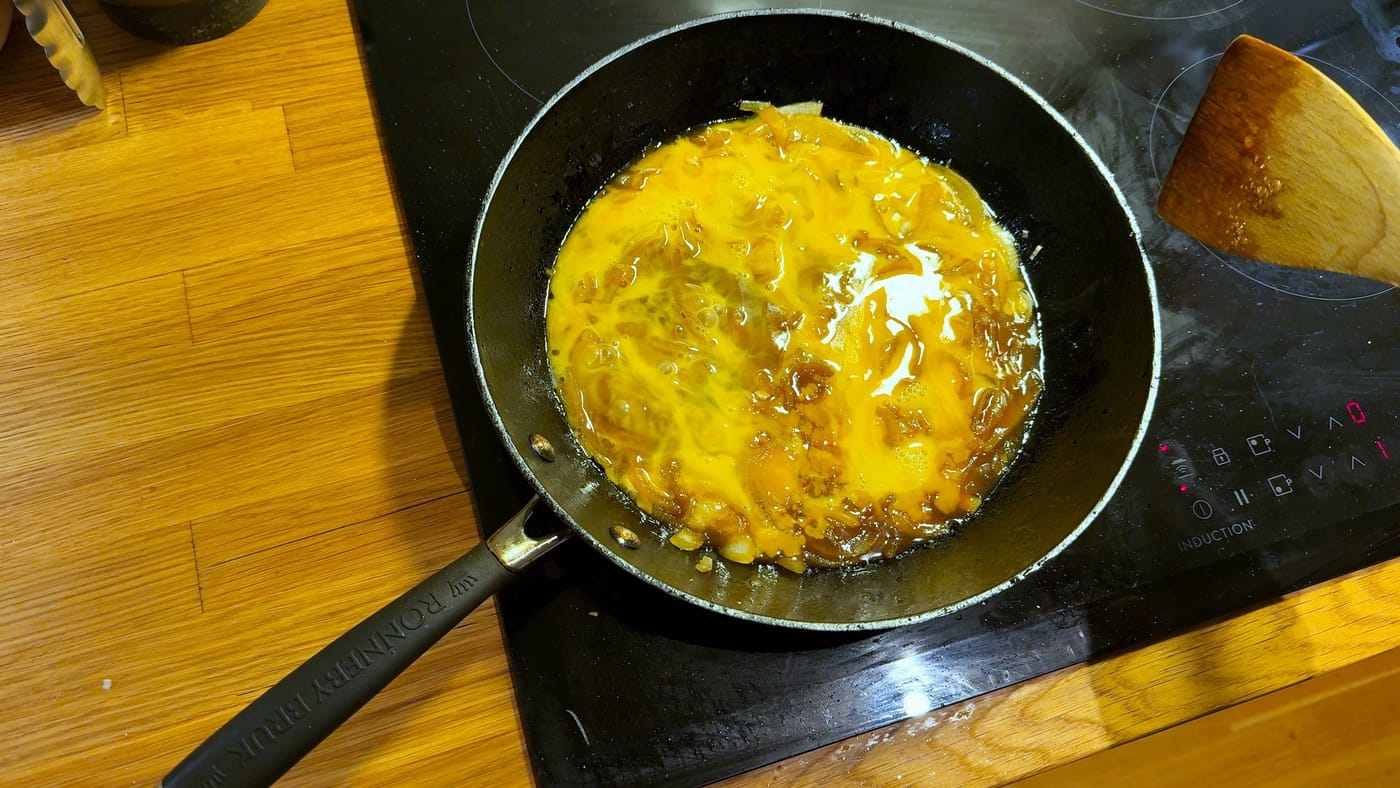
- Heat the oil in a pan and fry the onion. When it softens, add the sugar, the salt and the white pepper, then the mirin or sake and the soy sauce. Let it bubble until the onion is glossy and brown.
- Beat the eggs, two per portion. No need to whip them hard: a few strokes with chopsticks is enough. Pour them over the onions, scatter on some spring onion, and give it a gentle stir. Careful not to cook it too long. We're not making scrambled eggs here.
Final Step: Eat!
Perfect rice in the bowl. That soft, saucy Japanese not-quite-scrambled egg on top. The crispy karaage on that, and the rest of the spring onions over everything. It's so good that even the Japanese will get fat. And so will you.