Cream stuff
Dairy product coming from milk rich in fat.
Two way to get it:
- Mechanically: centrifugation
- Naturally: decantation
The fat part of cream is butter.
History
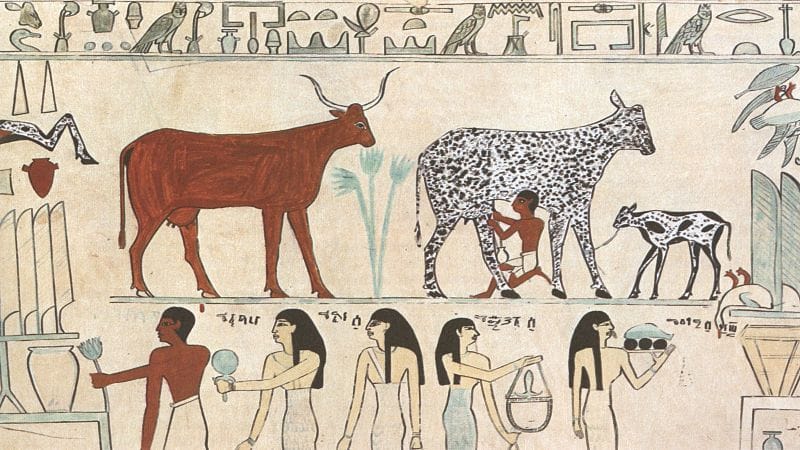
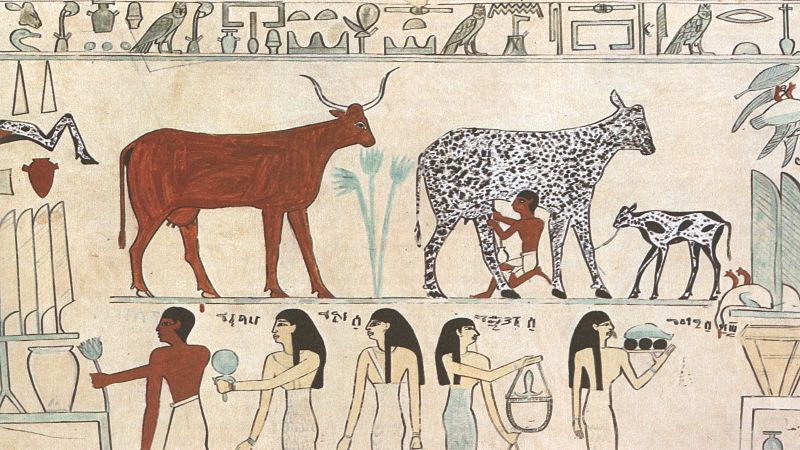
People use milk since the beginning of agriculture
Middle Age: cream and butter not found in any recipe to link sauces or soups. It was done with crushed almonds, hard eggs and bread crumb.
Sixteenth century: in Italy a desert is made with cream, sugar, and rose water.
Seventennth century: in Normandy people use cream in their sauces. Crème chantilly is invented
Cream is sold with different fat content, and the consequence is that different kind of creams are better used for different kind of things. Higher fat content implies thicker cream. Better to whip or use in enriching soups and sauces. Low fat creams are good in drinks and pouring over deserts.
Finland, Sweden and Denmark are the biggest consumers of cream in Europe. Bulgaria, Italy and Greece smallest consumers in Europe.
USA
- Half-and-Half cream: 10,5-18% fat. In fact this is a mix of milk (around 3,5 % fat) and light cream (18-30% fat), at equal parts. Can’t hold when whipped, doesn’t actually thicken sauces.
- Light cream: 18-30% fat. Not commonly found in the US. Also called Coffee cream and Table cream. Not good for whipping. May curdle when trying to use it to thicken a sauce.
- Coffee cream: See light cream
- Table cream: See light cream
- Whipping cream: 30-36% fat. Also called Light whipping cream.
- Light whipping cream: See Whipping cream.
- Heavy cream: >36% fat. Also called Heavy whipping cream.
- Heavy whipping cream: See Heavy cream.
- Sour cream: 18-20% fat. It is made by fermenting cream. The bacteria make the cream sour and thick.
- Whipped topping: Does not contain any cream, but only vegetable oils. Also called Dessert topping.
Canada
- Light cream: 5-10% fat. Yes, it is tricky if you are used to US appellations.
- Half-and-Half cream: 10,5-18% fat. In fact this is a mix of milk (around 3,5 % fat) and light cream (18-30% fat), at equal parts. Can’t hold when whipped, doesn’t actually thicken sauces.
- Whipping cream: 30-36% fat. Also called Light whipping cream.
- Light whipping cream: See Whipping cream.
- Heavy cream: >36% fat. Also called Heavy whipping cream.
UK
- Sterilised half cream: 12% fat. Can be found non-sterilized, under the name Sterilised cream.
- Cream: 18% fat. Also called Single cream.
- Single cream: See Cream. Used in sauces or poured over deserts.
- Whipped cream: 35% fat. Used on fruits or as cake toppings.
- Whipping cream: 35% fat. Used to whip.
- Double cream: 48% fat. Easy to whip.
- Extra-thick double cream: 48% fat. Thickest fresh cream available. Used to eat with cakes and pies.
- Clotted cream: 55-64 % fat, which classifies it as butter in the US. Also called Devonshire cream and Devon cream. It ise not whipped cream, but cooked cream. Used to spread on scones, or to bake, or for cream tea.
- Devonshire cream: See Clotted cream
- Devon cream: See Clotted cream
France
- Crème crue (Raw cream): 30-40% fat. Direct product of raw milk skimming, without any pasteurization or sterilization. Liquid.
- Crème fraîche liquide (liquid fresh cream): 30-40% fat. To be called crème fraîche, it has to be pasteurized in the production place, and then conditioned less than 24 hours later. Cannot be sterilized. It is liquid and hasn’t been fermented. Use to do crème Chantilly. Also called crème fleurette, fleur de lait (milk flower) and crème à thé (tea cream)
- Crème fraîche (fresh cream): To be called crème fraîche, it has to be pasteurized in the production place, and then conditioned less than 24 hours later. Cannot be sterilized. Soured by bacteria. Not as sour and thick as sour cream. American sour cream, as well as smetana, are not popular in France, and almost unknown of. Also called crème fraîche épaisse (thick fresh cream).
- Crème épaisse (thick cream):
- Crème liquide entière stérilisée (full sterilized liquid cream): >30% fat. It is a crème fraîche liquide that has been sterilized, and therefore cannot be called crème fraîche anymore. You can also find it UHT.
- Crème légère: 12-30% fat. Can be liquid or thick depending on if it has been fermented.
- Crème Chantilly (Chantilly cream): >30% fat. It is crème fraîche liquide (basically whipping cream) whipped until it gets thick, then mixed with sugar, and optionally some vanilla extract. It is very popular in France, used on strawberries for example. So popular that you can buy it ready-made in most supermarkets.
- Crème fouettée (whipped cream): Take crème Chantilly, add some stabilizers, lactic ferments, and some other crap. Must contains at least 75% of crème or crème légère, and at most 15 of sucrose. Also called neige de lait (snow milk), mousse à la crème (cream mousse) and fromage à la Chantilly (Chantilly cheese).
Since 1934, to be called crème it needs to have at least 30% fat. However, since 1980 the term crème légère (light cream) is accepted for products with more that 12%. Anything under 12% cannot bear the name of crème. Usually, dairy companies call such product spécialité crémière légère (light creamy specialty) or mélange de crème et lait (mix of cream and milk)
Maybe make a little schema to explain.
Switzerland
Demi-crème (half-cream): 15% fat.
Crème double (double cream): >45% fat.
Australia
- Extra light: 12% fat.
- Light cream: 18-20% fat.
- Pure cream: 35-36% fat. Can also be called Single cream.
- Thickened cream: 35-36,5% fat. Contains stabilizers and artificial thickeners such as gelatin. Can also be called Single cream.
- Single cream: can refer to Pure cream or Thickened cream.
Breakfast cream: Very thick cream, similar to clotted cream. Also called Qaimaaq
Qaimaaq: See Breakfast cream.
Smetana: 15-40% fat. Central & Eastern Europe. Sweet or sour cream.
Rjome: 35% fat. Norwegian sour cream.
Crema espesa: In Mexico. Similar to crème fraîche.
Pasteurized cream = High Temperature Short Time (HTST): Butter and buttermilk separated in two equal parts. It has been heated at low heat for 15 seconds.
Ultra-pasteurized cream = Ultra-High Temperature (UHT): Heated at high heat for 2 seconds. Does not whip as well. Sometimes stabilizers are added to be able to whip it into butter more easily. It taste less “fresh”. Most widely used milk pasteurization mode in Europe and Middle East. Increasing popularity in the US.
We have to think about how to “shape” this article.
By type of cream, and saying the equivalents in each country?
Maybe in another article?
In the nineteenth century, the very nice Mister Louis Pasteur notices that you can keep milk longer if you heat it at high temperature, then let it chill down slowly, before bottling it. Wait a minute… In fact, his discovery was about wine, not milk. He was French, after all! His discovery was immediately applied to beer as well in France. The process was established for milk by a German chemist called Franz von Soxhlet. Ironically, wine pasteurization was eventually abandoned since wine producers had other fish to fry: Americans imported their own grapes in France, and with it the not so nice phylloxera who killed half of the whole french vinewards.
Raw milk controversy. Some cheese need to be done with raw milk to have their appellation (ex: Mont d’Or, Camembert de Normandie, Beaufort)
Raw milk can still be found in some supermarkets in France (also in Quebec but not other parts of Canada, 28 states in the US, in became legal again in France in 1966, Germany, Belgium, Spain, UK, not Scotland), but in general it is not very consumed in occidental places as such, but used to make cheese. Milk usually raw in Africa and Asia. EU: “raw milk = legal and safe for human consumption”